
Table of Contents
In today’s hyper-connected digital landscape, identity is no longer static-it is performed, fragmented, and constantly evolving across platforms. Every interaction, from a subtle like to a sudden follow spree, contributes to a behavioral footprint that can reveal far more than users intentionally disclose. This is where the ability to find people on social media becomes less about simple search queries and more about interpreting layered digital behavior.
Modern users often actively mask intent, carefully curate feeds, and manage multiple personas across platforms. Yet even in this controlled environment, patterns leak through-sometimes undeniably suspicious, sometimes quietly revealing. The challenge is no longer access to information, but making sense of it.
Behavioral Patterns That Reveal Digital Presence
Before any advanced tool comes into play, understanding behavior is essential. Social media is a reflection of habits, not just statements. People unintentionally expose signals through repeated actions that form recognizable patterns.
When trying to find people on social media, analysts often observe:
- Repeated engagement with the same niche content or creators
- Sudden spikes in activity during specific hours or days
- Shifts in tone, humor, or emotional expression
- Over-curation of posts followed by long silence periods
- Clustering of interactions within tight friend groups
These signals may seem subtle individually, but together they brilliantly bridge the gap between anonymity and recognition. Even when someone tries to disappear into the noise, behavioral consistency often remains.
The Limitations of Traditional Search Methods
Despite the abundance of platforms, manual discovery is becoming increasingly inefficient. Searching by name, username, or email is no longer reliable in a fragmented digital ecosystem where identity duplication is common.
Key limitations include:
- Multiple accounts with identical or similar usernames
- Strong privacy settings restricting visibility
- Algorithm-driven feeds hiding older content
- Cross-platform identity separation
- Information overload leading to missed connections
Because of these issues, efforts to find people on social media manually often result in incomplete or misleading conclusions. The digital world has simply grown too complex for surface-level search methods.
From Fragmented Data to Behavioral Interpretation
The next evolution in social discovery is not just locating profiles but interpreting intent behind them. Digital identity is increasingly fluid, shaped by context, mood, and platform-specific behavior.
Instead of asking “where is this person?”, the deeper question becomes “what does their behavior suggest across platforms?”
This shift introduces a more analytical approach:
- Tracking engagement trends over time rather than isolated posts
- Mapping interest evolution instead of static identity labels
- Connecting interaction networks across platforms
- Identifying consistency gaps between personas
To find people on social media effectively today requires understanding not just presence, but patterns hidden beneath it.
Introducing Socialprofiler AI Chatbot as a Behavioral Intelligence Layer
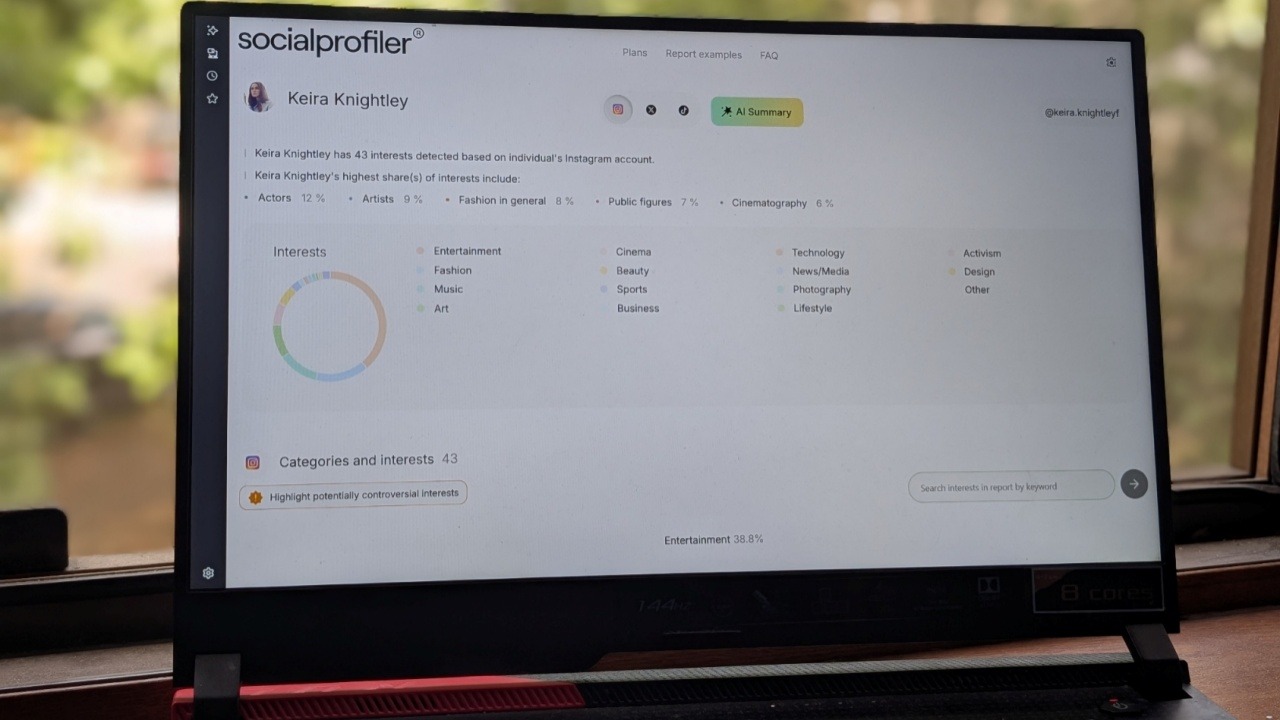
At this point, traditional methods reach their limits-and this is where Socialprofiler AI Chatbot enters as a structured behavioral intelligence layer. Instead of manually analyzing scattered profiles, users interact with an AI system that organizes and interprets digital signals in real time.
The goal is not just to locate someone online but to understand them through their observable behavior, making digital interpretation more structured, conversational, and
Socialprofiler AI Chatbot: Conversational Social Analysis Engin
The Socialprofiler AI Chatbot works like a guided conversation with data interpretation. Instead of complex dashboards or manual tracking, users simply ask questions about a person’s online presence.
It can help interpret:
- Likely interests based on engagement behavior
- Lifestyle patterns inferred from posting frequency
- Social connectivity and interaction tendencies
- General personality indicators derived from public activity
This makes it easier to find people on social media not just through search, but through behavioral understanding.
Digital Behavior Mapping System
One of its strongest capabilities is mapping recurring behavior patterns across platforms. Human behavior online is rarely random; it follows cycles, preferences, and emotional rhythms.
The system highlights:
- Repeated content themes and engagement categories
- Time-based activity clustering patterns
- Emotional tone shifts in comments and captions
- Network overlap between user communities
By connecting these data points, it creates a structured behavioral profile that goes beyond surface-level observation.
Real-World Social Interpretation Use Cases
In practical scenarios, the tool is used for a variety of observational and analytical purposes where understanding behavior matters more than simple identification.
Common use cases include:
- Evaluating compatibility signals in online interactions
- Understanding audience psychology for content strategy
- Assessing consistency of public personas
- Exploring shared interests for networking opportunities
Instead of guessing, users can rely on structured AI interpretation to guide their understanding when they find people on social media.
Socialprofiler AI Chatbot: Privacy-Aware Insight Processing
A crucial aspect of the system is responsible interpretation. It operates within publicly available data boundaries and focuses on behavioral insight rather than invasive profiling.
Responsible usage principles include:
- Avoiding assumptions beyond visible behavior
- Respecting platform privacy limitations
- Interpreting trends rather than personal judgments
- Using insights for constructive, non-invasive analysis
This ensures that digital exploration remains ethical while still being informative and insightful.
Socialprofiler AI Chatbot: Streamlined Workflow for Social Discovery
The workflow is designed to reduce complexity and enhance clarity. Instead of juggling multiple tools or manual tracking methods, everything happens through a single conversational interface.
A typical process includes:
- Providing a public profile reference or identifier
- Asking natural-language questions about behavior or interests
- Receiving structured AI-generated insights instantly
- Refining queries for deeper behavioral clarity
This streamlined system significantly improves efficiency when trying to find people on social media in a meaningful, structured way.
Conclusion:
Social media has evolved into a layered ecosystem where identity is no longer fixed but continuously performed. In such an environment, simply searching for profiles is no longer enough. The ability to find people on social media now depends on interpretation, behavioral mapping, and contextual understanding.
Tools like Socialprofiler AI Chatbot represent a shift toward intelligent social analysis, where fragmented signals are transformed into structured insights. Instead of navigating endless profiles blindly, users gain a clearer, more analytical perspective on digital behavior.
About the Author


